How to Structure Channel Partner Tiers for Maximum Growth: Criteria, Benefits, and Automation
Picture a new partner, full of excitement to sell your solution, but just a few months later, that spark is gone. He’s unclear on what he’s supposed to deliver, what rewards are possible, or even how he’s stacking up against others. Meanwhile, your top performers keep asking for VIP treatment, but you’re left wondering—who’s really earned it? Without a clear, motivating tier structure, even the most promising channel program can stall out. What sets a thriving partner ecosystem apart from a stagnant one usually isn’t luck. Most of the time, it comes down to how you design your tiers and make each step toward growth obvious and achievable.
How Many Tiers Should You Have (and What Should You Call Them)?
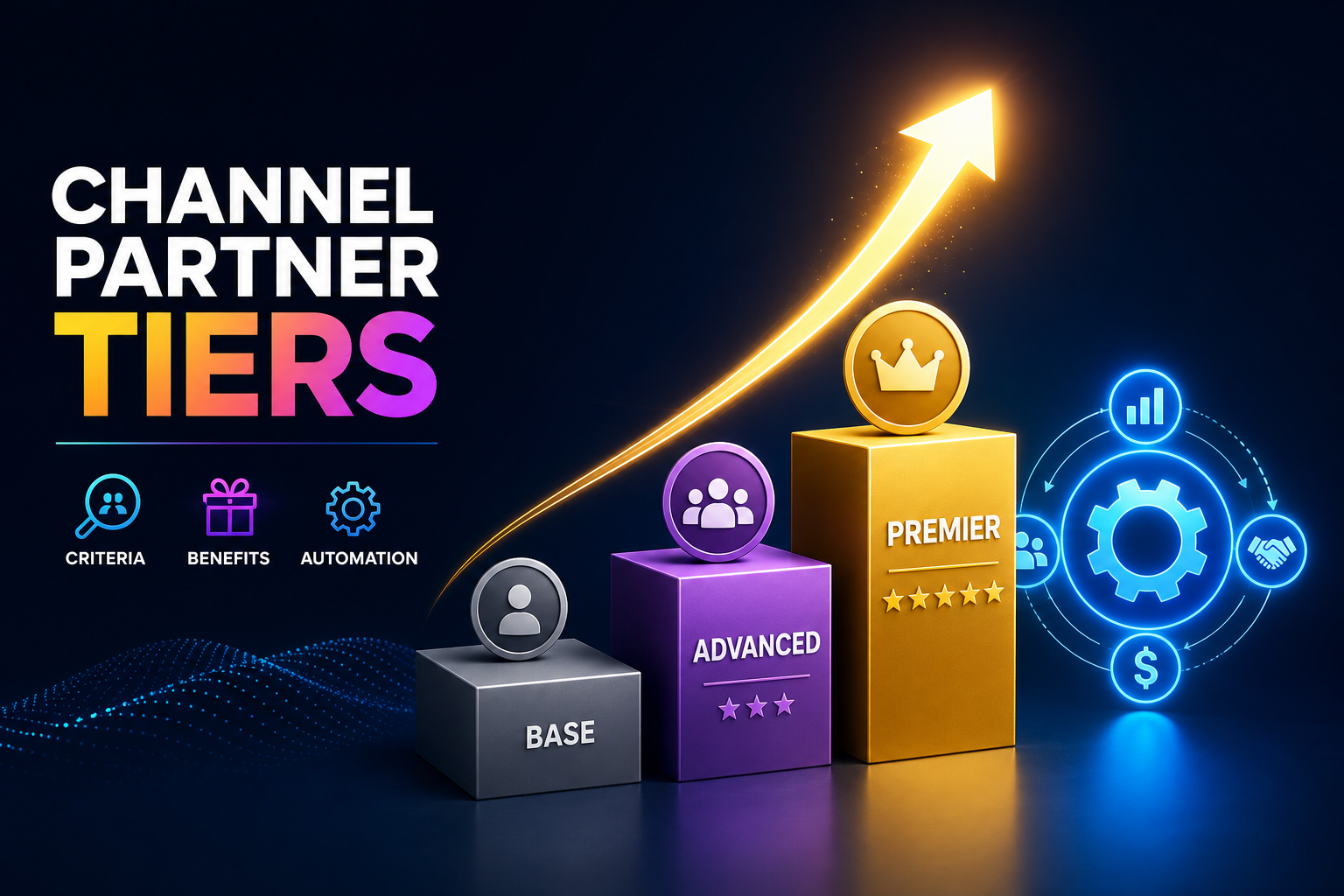
Deciding how many levels to include is the first real crossroads when mapping out your structure channel partner tiers maximum growth. If you go with too few, everyone gets lumped together, which leaves mid-tier partners unmotivated and makes it harder to reward your best ones. Too many, and things get confusing fast—no one’s sure where they stand or how to move up.
Most successful channel programs land on three to five tiers. This range gives enough differentiation to inspire progress while avoiding unnecessary complexity. Take Track360’s model: four clear levels—Registered, Silver, Gold, and Platinum. Introw suggests three: Registered for new or low-volume partners, Select for those delivering steady results, and Elite for those driving real business impact and deserving executive support.
The names you choose aren’t just window dressing—they set the tone for the entire program. “Registered” or “Authorized” welcomes newcomers. Names like “Select,” “Silver,” or “Certified” signal progress. At the top, “Gold,” “Platinum,” and “Elite” provide that medal-like sense of achievement, showing who’s really at the front of the pack. The trick is keeping these names in line with market norms, but don’t be afraid to tailor the style to your company’s brand. An aspirational, but approachable, tier name helps keep your channel engaged.
Setting Performance Criteria That Actually Drive Growth
Once you’ve settled on the number of tiers and the right labels, it’s time to nail down what counts toward moving up. The strongest channel programs rely on a mix of straightforward metrics and strategic behaviors that tie directly to business results. The real trick is balancing numbers that are simple to track with requirements that foster the right kind of engagement.
Rewardian’s scoring model puts revenue at the center: 50% of a partner’s score comes from the revenue they bring in. Depth of training—like how many certified reps or completed courses—makes up about 25%. The rest can come from goals that reinforce your strategy, like co-marketing participation, quarterly meeting attendance, or hitting service SLAs.
These criteria can’t just be good intentions—they should connect directly to fields and processes in your CRM or partner portal. If co-marketing is required to move from Silver to Gold, set up a way for those activities to be logged and tracked. That way, progress is automatic, fair, and auditable, cutting down on endless debates over who deserves a promotion.
Balancing quantitative and qualitative requirements is what separates a program focused only on sales volume from one that genuinely supports long-term business building. Clear criteria also remove any sense of favoritism or murky decisions, making advancement a matter of effort and alignment, not backroom deals.
Tier Thresholds: Making Advancement Achievable

Having clear criteria is important, but if your promotion thresholds are out of touch with reality, partners will check out early. A common mistake is setting the bar so high at the start that almost no one moves up—or making the mid-tiers so hard to reach that motivation dries up in the middle.
Magentrix and Level 6 advise setting first-tier requirements so that a new partner can realistically achieve them within 12 months. Skip the impossible targets upfront. The goal here is to encourage fast engagement, not put up walls. For example, to reach Registered, just completing onboarding, logging a first deal, and finishing basic training might be enough.
For mid-tier levels, the requirements should be ambitious, but not out of reach. Level 6 recommends aiming for 60% to 70% of active partners to reach the middle tier within a typical yearly planning cycle. This keeps most partners motivated and focused on the next step. Track360, for instance, defines Silver as at least five conversions per quarter or $2,500 in quarterly revenue, while Gold requires 20 conversions or $10,000 in the same period.
The top tier is for partners who deliver something truly special. The Vx Group’s example is straightforward—entry to the strategic tier means bringing in at least five qualified referrals per quarter or $500,000 in annual referred revenue. That way, the top-level perks go to those who are really moving your business forward.
These thresholds need to be revisited regularly. What makes sense during a boom year can get out of sync if the market tightens. That’s why keeping an eye on performance data and adjusting thresholds as needed is essential for a program that stays relevant.
Designing Rewards and Benefits That Match Each Tier
Partners are much more motivated when every step up comes with tangible rewards. The key is to match benefits to the value generated at each tier. Over-promising to new partners can be just as damaging as under-rewarding your top performers.
At the entry level, partners usually get a basic commission—Track360 recommends a 15% revenue share or $100 per conversion (CPA). That’s enough to spark engagement without putting too much strain on your support or marketing teams.
As partners reach the middle tier, the perks increase: larger commissions, access to marketing development funds (MDF), limited technical support, and sometimes invites to exclusive training. Gold status, for example, might mean a 25% revenue share or $150 per CPA, plus deal approval priority and co-marketing opportunities.
The real standouts come at the very top. The strategic tier, as shown by The Vx Group, offers a 12–15% commission on first-year revenue (renewable), direct access to executives, a say in the product roadmap, and a dedicated co-marketing budget. These partners also get quarterly business reviews, their own support contacts, and first dibs on beta tests.
To avoid confusion or letdowns, it’s best to create a simple, clear benefits table for each tier, as Introw recommends. This lets partners see exactly what’s on offer and plan their efforts accordingly. When communication is straightforward, the perks feel real and attainable—not just vague promises.
Bringing Automation and Visibility to Tier Progression

Gone are the days when partner promotions were decided in backroom meetings. Today’s best-loved programs give partners full visibility and real-time updates on their status.
Automation starts with linking your partner portal to your company’s CRM. This way, revenue, certifications, registered deals, and training completion are all synced automatically. When a partner hits the criteria for a new tier, the system flags their eligibility, sends a notification to the manager, and updates benefits and access right away.
Track360 and Magentrix both highlight how automated systems keep things fair and consistent. When everyone knows promotions are data-driven and automatic, there’s less suspicion around who moves up. Dashboards and visible progress bars—like Introw suggests—also cut down on questions about status.
Keep monitoring performance: quarterly reviews or a rolling window approach mean partners can move up or down quickly based on actual results. Sharing the rules and advancement paths in advance, and communicating any changes ahead of time, helps everyone feel in control of their journey in the program.
Accountability and Ongoing Program Improvement
Building an effective tier structure isn’t a one-and-done project. Keeping it sustainable means regularly reviewing what works and being willing to fix what doesn’t. The ideal is when every partner knows that status is earned—and can be lost if performance slips.
I recommend annual or semiannual reviews, or continuous cycles if your program is mature enough. Only include active partners in your analysis—leaving inactive accounts in the mix will skew your view of the channel. If a partner drops below the required thresholds, they should move down a tier until they recover performance. This keeps the program dynamic and ensures that benefits go to those still delivering results.
Continuous improvement should include frequent updates to both criteria and incentives. Changes in the market, new strategic goals, or even partner feedback can signal it’s time to recalibrate. Involving channel managers and a few key partners in these reviews helps make sure you’re staying grounded in business reality.
Channel programs that combine measurable benchmarks, behavioral incentives, automation, and real transparency keep partners engaged and drive better outcomes. Making the path from Registered to Elite clear, fair, and truly attainable gives every partner a reason to stay invested—and makes it easy for you to spot and support those who deliver, year after year.

I’m Omar Khalil, and I’ve spent the past decade working within the MEA technology channel ecosystem, from distribution in Dubai to partner enablement across Africa. I write about practical strategies for vendors, distributors, and resellers navigating the unique challenges of selling technology solutions in the Middle East and Africa. My focus is on actionable intelligence drawn from real market experiences, not generic theory. When I’m not writing, I’m usually at a channel event somewhere between Riyadh and Read the full About the author page.