How to Reduce SaaS Churn in the First 90 Days for Channel Customers
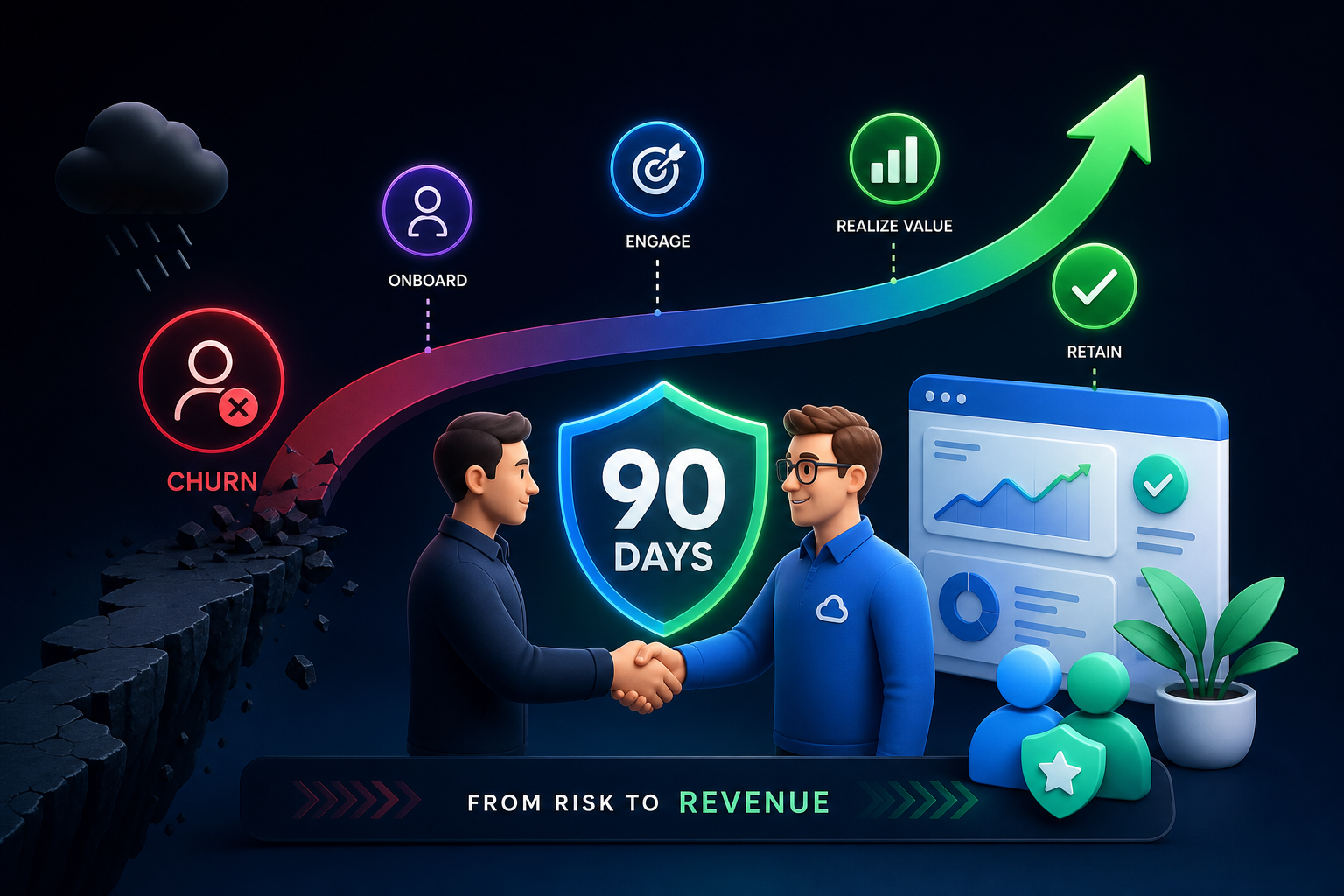
Imagine this: a new customer comes in through a channel partner, everyone is riding the high of a closed deal, and then—almost before you can blink—they vanish. The login sits unused, onboarding stalls, and after a month or two, the account cancels with no warning. That gut punch is all too familiar for SaaS teams chasing growth through partners. Those first three months after sign-up decide whether you’re building solid recurring revenue or pouring water into a bucket full of holes.
Why the First 90 Days Shape Channel Retention
The first 90 days following a channel sale aren’t just a sales afterthought. For customers coming from partners, this window decides if your product becomes a real solution or just another forgotten tab. With channel deals, most customers start with less context and barely know your team. The reseller’s pitch might have sounded good, but now they’re searching for proof—right away.
Treating the first 90 days as a structured onboarding sprint, not just a handoff, has a measurable effect on retention. Customers need to see value fast, or they simply lose interest and slip away without asking for help. It’s common to see channel users churn quietly, making it essential to guide them with clear milestones and proactive outreach.
Teams who succeed here do more than walk users through setup. They focus on leading every customer to a real “Aha Moment”—the first concrete sign your product solves a problem. The clock starts the minute the partner closes the sale, and every day of confusion or inactivity raises the odds of losing that account early.
One Activation Milestone Beats a Laundry List
Instead of hitting new customers with endless setup tasks, the most successful SaaS teams pick a single activation milestone. This is the one action that most predicts whether someone will stick around—a first campaign sent, data connected, or teammate invited, for example. Getting channel users to this step within the first week is key.
Every part of the onboarding, from welcome emails to product walkthroughs, should pull new users toward that milestone. If your “Aha Moment” is when a customer completes their first workflow, make that the focus. Highlight the path with checklists, tooltips, and short videos. If a user gets stuck, automated nudges help get them moving again.
For channel accounts, coordination with your partners matters. Make sure the activation milestone is set up as the promised outcome during the sales process. That way, what the customer experiences matches what was sold—cutting down on confusion and regret. Many teams use a week-one checklist or guided setup to make the journey clear instead of dropping users on a blank dashboard.
Break Down Churn by Channel and Plan
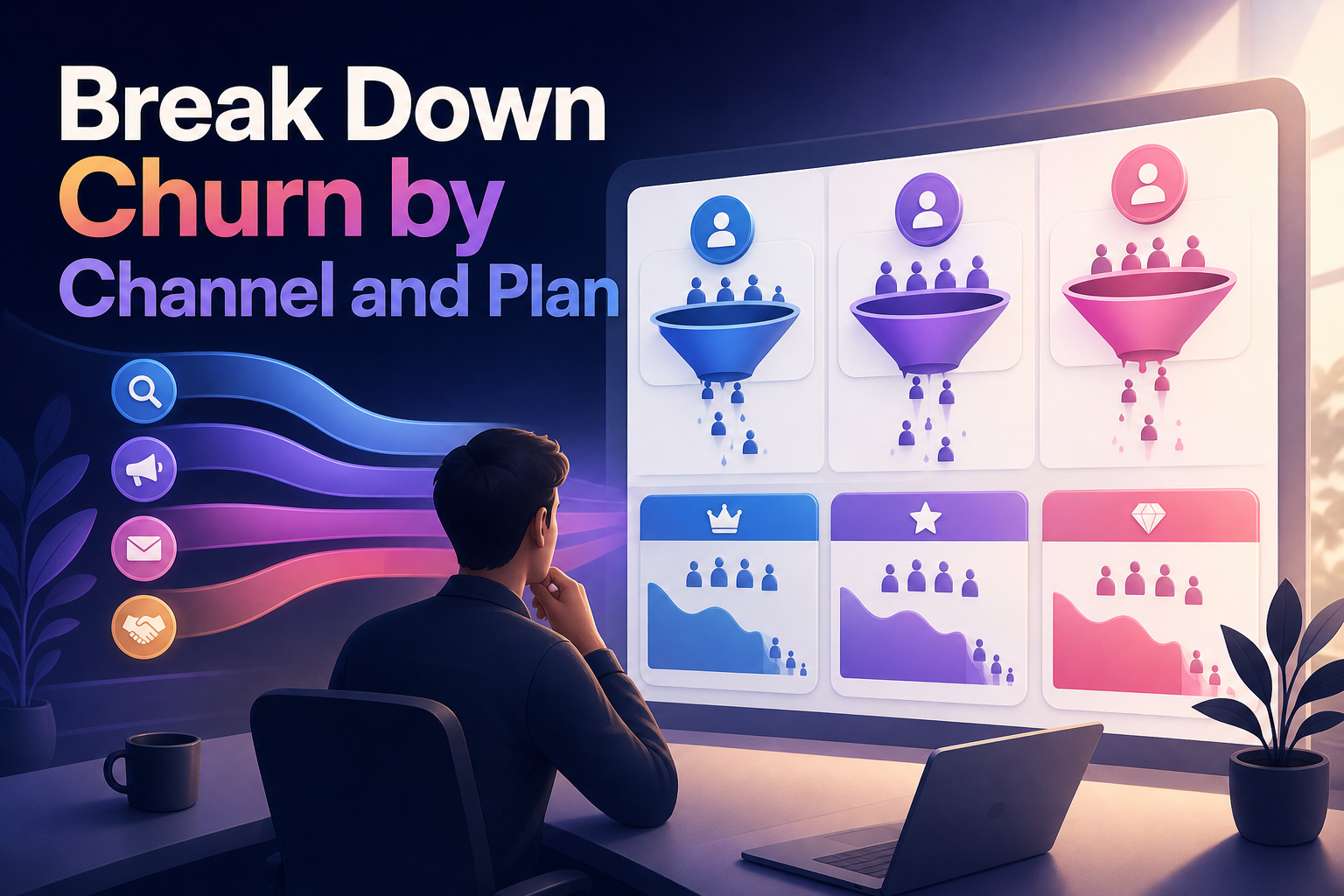
Churn looks different depending on where your customers come from and what plan they’re on. To catch problems early, segment your churn data by channel, plan, and usage. Track lost accounts in three cohorts: those who leave in the first 30 days, between 30 and 90 days, and after 90 days. This makes it clear where drop-offs are happening and which partners or price tiers need attention.
Say you notice lots of monthly subscribers from a specific partner cancelling in the first month. That’s your cue to look at both how those customers are onboarded and what the partner is promising. Usage metrics—logins, feature adoption, support tickets—add another layer. If someone barely logs in during those first weeks and hasn’t hit the activation milestone, they’re at much higher risk.
Tag each churned account with both the channel source and plan type. This lets you spot patterns and step in before issues snowball. Over time, compare churn rates between customers who got extra onboarding help and those who didn’t. This turns random stories into real data, helping you fine-tune your channel strategy.
Don’t Ignore Involuntary Churn—Automate Payment Recovery
Voluntary churn gets most of the attention—customers who leave because your product didn’t fit. But involuntary churn, which often comes from failed payments or expired cards, can make up 20% to 40% of total churn in SaaS. Channel customers are especially at risk, since billing details might be rushed or handled by the partner.
You need automated payment recovery (dunning) to keep this from eating away at revenue. The process is simple: when a payment fails, immediately retry, then follow up with a series of reminder emails or product messages. These should clearly show how to update billing info and provide direct links.
Pair billing automation with usage data. If a channel account misses a payment and hasn’t been active, flag it for a personal check-in from your customer success team. Quick, proactive recovery can save these accounts and shows customers—even those from partners—that you care enough to reach out.
Annual plans churn three to five times less than monthly ones, so encouraging longer commitments is also smart. Still, no matter the plan, every SaaS with channel sales needs automated payment recovery in place.
Quick Follow-up and Human Support Make the Difference
In those first days after signup, channel customers are most likely to hit snags and disappear. To keep them engaged, try to bring them back for a second session within 48 hours of their first login. This could be an automated email, an in-app pop-up, or even a simple “Congrats!” message after a first win.
What really helps is assigning a specific contact for each new channel account—someone the customer knows by name and can easily reach if they get stuck. Even if your support team is spread out, making one person the owner builds trust and accountability. Early check-ins like “I saw you haven’t finished setup—need a hand?” often prevent little hurdles from turning into cancellations.
Channel customers don’t always know when or how to ask for help, so set up structured check-ins. Make the first support interaction easy and positive—keep it friendly, quick, and focused on getting them unstuck. AI chat and help centers are useful for basic questions, but nothing replaces a real person during that critical first week.
What Works in Onboarding Programs (and How to Measure It)
A strong onboarding program isn’t just a checklist. It’s a planned process built around clear milestones, targeted help, and constant measurement. For channel customers, the goal is simple: move users from “just signed up” to “actually using” as fast as possible.
Start by mapping out the onboarding and picking the three most important milestones that predict if someone will stick around. The first should happen within the first week—usually the activation event. The next might be inviting a teammate or connecting an integration. Every message, tooltip, and call to action should point toward these steps.
Compare churn rates by looking at those who got structured onboarding versus those who didn’t, across your 0–30 and 30–90 day cohorts. Structured onboarding programs have been cited in industry articles as reducing first-90-day churn by 20% to 30%, though your own results may differ and this should be used as a directional benchmark, not a guarantee (ProGeekTech, CustomerScore). Treat this as a benchmark and keep adjusting based on your data.
Set up feedback loops by asking new channel customers what confused them, where they got stuck, and what worked well. Use these answers to keep refining your onboarding so it’s always relevant—not just a box to check.
Use Short Exit Surveys to Learn Why Channel Customers Leave

When a channel customer cancels, that’s your one shot to find out why. Long surveys don’t get answers, but a quick three-question exit survey can reveal the majority of actionable churn reasons. Stick to questions like: “What was the main reason for leaving?”, “What did you expect that didn’t happen?”, and “What would have changed your mind?”
Send this survey to every channel customer who leaves in the first 30 days, then group the answers into the top three to five causes. You’ll usually see themes like confusing onboarding, missing features, billing mishaps, or weak support. The goal isn’t just to collect responses—it’s to build a playbook for fixing the real issues.
Over time, these survey results help you spot which channel partners need better training or which onboarding steps confuse people most. They also give your product and customer teams direct, specific feedback instead of just guessing why accounts vanish.
Make Channel Churn Reduction a Habit, Not a Project
Lowering early churn for channel customers comes down to running a tight loop between onboarding, support, and product. Track churn by cohort and channel. Use activation milestones, health scores, and payment recovery tools as your foundation. Fast follow-ups and personal support stop customers from disappearing quietly.
The biggest gains come from closing the loop: take what you learn from exit surveys and churn analysis, and work it back into your onboarding and partner enablement. If a step keeps tripping up new users, fix it in your setup flow. If a partner’s customers rarely reach activation, have a direct conversation and reset expectations.
Each quarter, review your churn for the first 90 days and look for trends. Did that new onboarding checklist help? Are some channels or plans still losing customers at a higher rate? Keep pushing improvements. Retention works best when it’s a living system, not a check-the-box exercise.
Winning teams treat the first 90 days as a sprint to real value—for their customers and for their own learning. Shorten the path to the first “Aha Moment,” automate common pitfalls like failed payments, and act fast on feedback. That’s how you turn a leaky bucket into a steady engine for long-term growth.

I’m Omar Khalil, and I’ve spent the past decade working within the MEA technology channel ecosystem, from distribution in Dubai to partner enablement across Africa. I write about practical strategies for vendors, distributors, and resellers navigating the unique challenges of selling technology solutions in the Middle East and Africa. My focus is on actionable intelligence drawn from real market experiences, not generic theory. When I’m not writing, I’m usually at a channel event somewhere between Riyadh and Read the full About the author page.


![How to Choose the Right SaaS Subscription Model for Channel Partners [2026 Guide]](https://techchannelmea.com/wp-content/uploads/2026/07/how-to-choose-the-right-saas-subscription-model-for-channel-partners-2026-guide.png)
![How to Choose Metrics for a SaaS Subscription Dashboard [2026 Guide]](https://techchannelmea.com/wp-content/uploads/2026/07/how-to-choose-metrics-for-a-saas-subscription-dashboard-2026-guide.png)