
How to Choose the Best Billing Cycle for SaaS Subscriptions
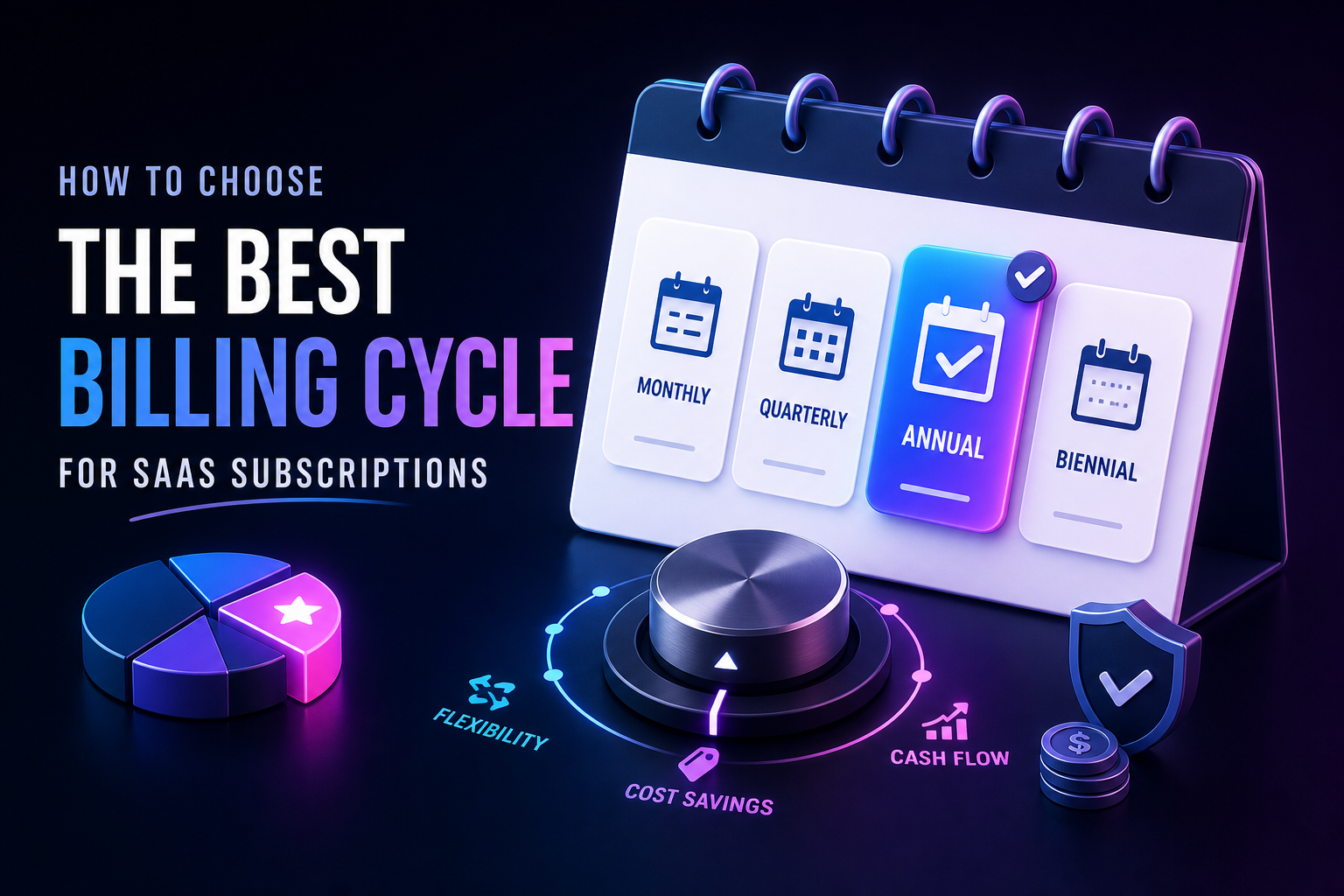
It’s a familiar moment for anyone running a SaaS business: you’ve built a product that people want, you’re ready to launch your pricing page, and then the question hits—should you bill customers monthly, annually, or let them pick? The wrong answer isn’t just a minor technical hiccup. It can mean a spike in churn, unpredictable cash flow, or customers walking away before they even see your product’s real value. In 2026, with so many billing options and tools at your disposal, the decision feels less like a simple toggle and more like threading a needle between growth and sustainability.
Understanding SaaS Billing Cycle Options
At its core, a SaaS billing cycle is the period between one invoice and the next—essentially, the rhythm that defines how often customers pay and how revenue lands in your bank account. Most SaaS companies today default to monthly, quarterly, or annual billing cycles. Monthly cycles typically span 30 to 45 days, quarterly ones about 90 days, and annual cycles stretch to 365 days. These aren’t just arbitrary intervals; they shape everything from how customers perceive your commitment to how your team projects revenue.
The choice isn’t limited to these three, but monthly and annual remain the backbone for the vast majority of SaaS products. Quarterly cycles exist, but they’re usually reserved for niche markets or specific enterprise deals. When explaining your plans to customers, clarity is key: label a monthly plan as “30 days,” a quarterly as “90 days,” and an annual as “365 days” to avoid confusion about renewal dates or what’s included in each period.
It’s not just about picking a timeframe—it’s about setting expectations. A clear billing cycle signals to your customers what they’re signing up for and helps prevent awkward disputes down the line. Your pricing page should make these cycles explicit, listing billing frequency, included features, and what happens at renewal. This small step can save hours of support headaches later.
Monthly vs. Annual Billing: Pros, Cons, and Customer Impact
Monthly billing has become popular for one simple reason: it lowers the barrier to entry. Customers see a smaller upfront charge, feel less risk, and are more likely to click “start trial” or “subscribe.” If you’re fighting for early traction or targeting price-sensitive users, monthly plans can boost your sign-up rate.
But there’s a catch. With every monthly renewal comes a new decision point—an opportunity for the customer to cancel if your product hasn’t proven its worth. This can drive up churn, especially if users haven’t yet reached their "aha moment." The result? Great for onboarding, not so great for retention.
Annual billing flips the script. It requires a bigger upfront commitment, which may scare off some prospects, but it rewards you with more predictable revenue and a longer customer lifetime value. Fewer renewal events mean fewer chances for second thoughts. SaaS businesses often sweeten the deal by offering annual plans at a visible discount, positioning them as the “best value” to nudge customers toward a longer relationship. For example, many companies set annual plan pricing so the monthly equivalent is lower than the standard monthly plan, making the annual option visibly more attractive to customers who can commit upfront (Chargebee, Monetizely).
Choosing between monthly and annual cycles isn’t just about your preferences—it’s about your customers’ journey. If your product needs time to show its value, a longer cycle buys you that runway. If your audience wants flexibility and low risk, monthly may be the better entry point. Many successful SaaS teams offer both, letting customers self-select based on their needs while using discounts and value framing to guide choices.
Aligning Billing Cycle with Customer Value Realization

The most overlooked step in picking a billing cycle is mapping your customer’s value realization timeline. In other words: how long does it take, on average, for users to experience the core benefit of your product? If your SaaS delivers immediate value—say, a simple analytics dashboard—monthly billing aligns well. But if the value unfolds over weeks or months, such as onboarding a team or integrating data, annual or quarterly cycles make more sense.
To put this into practice, look at your onboarding analytics and customer feedback. Ask yourself: when do users typically hit their first success milestone? If that 'aha moment' takes more than a single billing period to reach, a shorter cycle might prompt renewals before users have truly seen the benefit. In these cases, offering a quarterly or discounted annual plan as the default can help bridge the gap between signup and satisfaction.
The Commitment-Value Alignment Framework suggests matching your billing cycle to the time it takes for users to experience meaningful value. This approach reduces cancellation risk, supports stronger testimonials, and ultimately leads to more stable revenue. For many SaaS products, especially those with complex onboarding, aligning cycle length with value realization is the difference between high churn and loyal customers.
Using Competitor Benchmarking to Set Your Default Cycle
Before locking in your billing cycle, take a close look at what your competitors are doing. Start by listing the top five to ten SaaS products in your space—direct rivals, adjacent tools, and even aspirational brands. Note whether they offer monthly, annual, or both, and how they position each plan on their pricing pages.
This benchmarking isn’t just about copying what’s popular. It’s about understanding market norms and meeting customer expectations. If every major player in your niche defaults to annual contracts, offering only monthly could signal less stability or make your product seem riskier. On the other hand, if monthly is the expectation, forcing annual commitments may create friction and slow down new signups.
Use this research as a baseline. Matching the most common cycle in your segment is often the safest starting point. From there, you can test alternative cycles with select customer segments or special offers. Keep an eye on feedback and engagement metrics—if you notice higher churn or more support requests tied to a particular cycle, it may be time to rethink your approach.
Leveraging Modern SaaS Billing Tools for Flexible Cycles
Not so long ago, changing your billing cycle could require significant development work and manual adjustments. In 2026, SaaS billing platforms like Stripe Billing, Chargebee, and others highlighted in Upflow’s latest roundup have made this process much simpler. With these tools, you can offer multiple cycles—monthly, quarterly, annual—without custom code. You can even enable proration for mid-cycle plan changes or usage-based billing if your business model calls for it.
Dunning management, once a painful afterthought, is now baked into most modern platforms. Failed payments can trigger automated retries, reminders, and even customized messaging depending on whether the customer is on a monthly or annual plan. This keeps revenue steady and reduces the time your finance team spends chasing invoices.
If you’re launching or updating your SaaS in 2026, take advantage of these features. Configure a sandbox environment to test how signup, renewal, and cancellation flows work for each billing cycle. Make sure your CRM and analytics tools are hooked in so you can track customer behavior, churn, and feedback by cycle. These integrations let you experiment with cycles, discounts, and dunning strategies without risking customer confusion or financial reporting headaches.
Communicating Billing Cycles Clearly to Avoid Confusion

A surprising number of SaaS companies still lose revenue to billing misunderstandings. The solution isn’t more legalese—it’s plain language and proactive communication. On your pricing page, spell out for each plan: the billing cycle and length (e.g., “Billed every 30 days” or “Billed annually”), the currency, what’s included in each billing period, and exactly when charges will occur.
Contracts should go a step further. Define the billing model (flat fee, usage-based, etc.), billing frequency, what happens in case of late payments, and who’s responsible for taxes. This clarity not only prevents disputes but also builds trust with customers considering a long-term commitment.
Before launching any new cycle or plan, test your signup and renewal flows from a customer’s perspective. Does the user know when service starts and when it renews? Are cancellation and refund terms easy to find and understand? A quick round of internal testing—plus feedback from a handful of trusted beta users—can surface confusing spots before they become support tickets.
Behind the scenes, align your finance processes with your billing cycles. Ensure your revenue recognition and invoice schedules match the cycles you offer. This step is vital for accurate SaaS metrics and keeps your accounting team from scrambling at quarter-end.
Turning Billing Cycles into a Competitive Advantage
Selecting the right billing cycle isn’t a one-time decision. As your SaaS grows, customer needs and expectations may shift. That’s why it’s smart to treat your billing setup as an ongoing lever, not a “set it and forget it” admin task. Use your analytics platform to segment churn, upgrades, and customer feedback by billing frequency. If you see a spike in cancellations on monthly plans but high satisfaction on annual, consider tweaking your default cycle, discount structure, or onboarding flow.
It’s also important to revisit your competitor benchmarking regularly. If a new entrant starts offering a novel billing option or an established player changes their default cycle, it signals evolving customer preferences. Stay nimble by prioritizing billing platforms that make experimenting with cycles and discounts painless.
Finally, don’t underestimate the power of clear communication. The SaaS companies that stand out in 2026 are those that make billing transparent, predictable, and aligned with how customers experience value. The right billing cycle, tailored to your product and market, is more than a payment schedule—it’s a foundation for growth, retention, and customer trust.

I’m Omar Khalil, and I’ve spent the past decade working within the MEA technology channel ecosystem, from distribution in Dubai to partner enablement across Africa. I write about practical strategies for vendors, distributors, and resellers navigating the unique challenges of selling technology solutions in the Middle East and Africa. My focus is on actionable intelligence drawn from real market experiences, not generic theory. When I’m not writing, I’m usually at a channel event somewhere between Riyadh and Read the full About the author page.


![How to Choose the Right SaaS Subscription Model for Channel Partners [2026 Guide]](https://techchannelmea.com/wp-content/uploads/2026/07/how-to-choose-the-right-saas-subscription-model-for-channel-partners-2026-guide.png)
![How to Choose Metrics for a SaaS Subscription Dashboard [2026 Guide]](https://techchannelmea.com/wp-content/uploads/2026/07/how-to-choose-metrics-for-a-saas-subscription-dashboard-2026-guide.png)