Firewall as a Service vs Traditional Firewalls for MEA SMEs: Choosing the Right Fit
In Nairobi, a midsize distributor faces the daily reality that most of its people aren’t anywhere near a desk. The headquarters sits in the city center, but the business has two more branches scattered across different cities, plus a sales team that’s always on the move—sometimes working from home, sometimes logging in from hotel Wi-Fi, and sometimes closing a deal from the car. The IT department is small: one person in-house, another part-timer who drops in when needed. After a scheduled firewall update knocked a branch offline for half a day, the CEO finally asked, “Why are we still buying hardware for every office? Can’t this be managed from the cloud?” For this SME, the real question wasn’t about firewall brands or technical specs—it was about whether the old security model still fit how the company actually worked.
What FWaaS Brings to Distributed SMEs
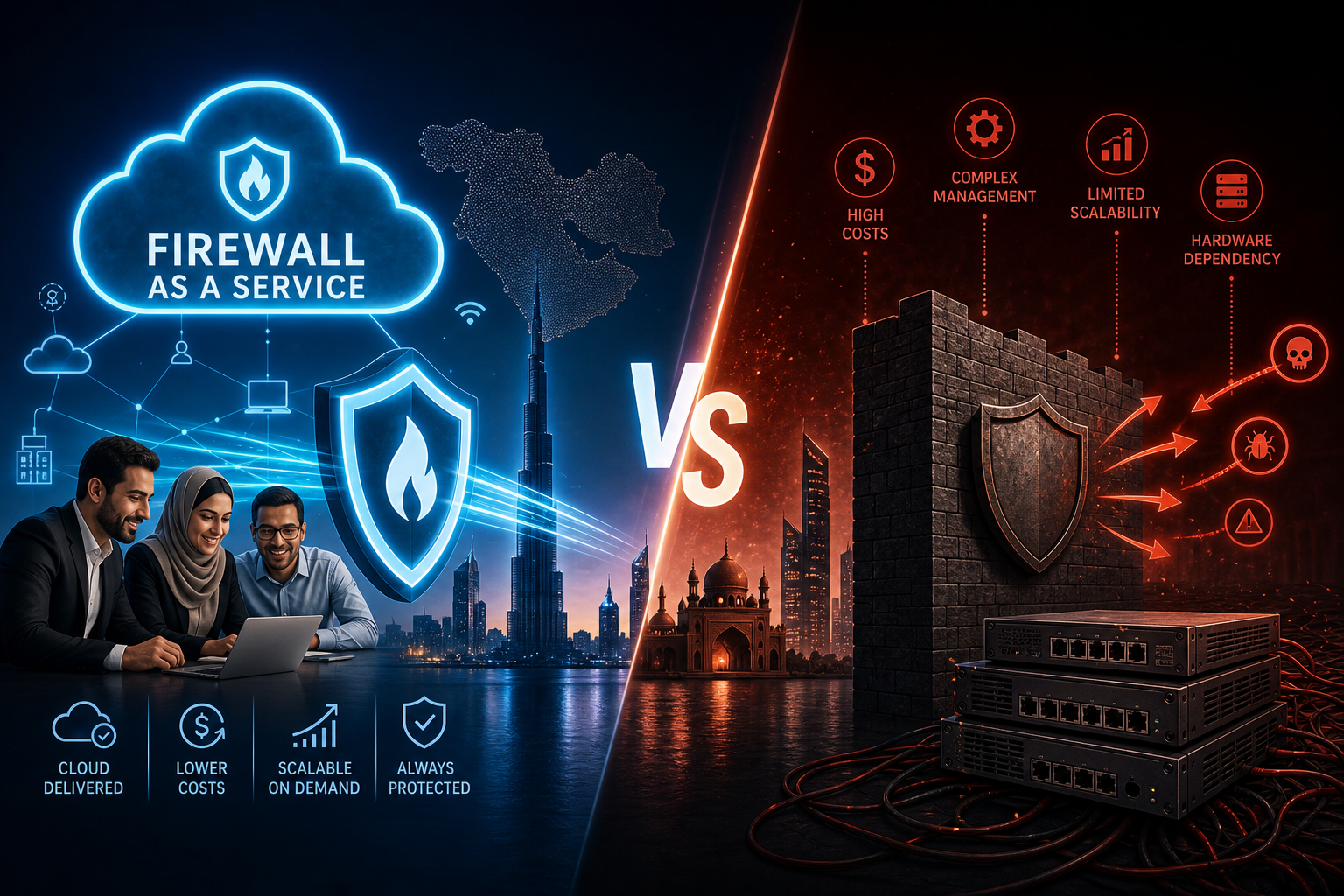
For many MEA SMEs, the workday no mais happens within a single office, and that shift is exactly where Firewall-as-a-Service (FWaaS) starts to shine. Instead of buying a physical firewall for each location—a practice that made sense in the past—FWaaS is delivered entirely through the cloud by a third-party provider. This means the company pays a predictable subscription, rather than a big upfront investment in hardware, and gains security that adapts to wherever staff connect: at home, in a branch, on the road, or using cloud applications.
That flexibility becomes especially valuable when your workforce is spread out across regions or constantly changing. For example, if you open a new branch in Dar es Salaam or take on remote staff in Johannesburg, you don’t need to ship or install new appliances. FWaaS lets you apply the same security policies instantly from a central online dashboard, with changes propagating to every user in minutes. It doesn’t matter if your Casablanca office is two software versions behind or if your Abu Dhabi branch missed a patch—FWaaS keeps everyone on the same page.
This model also aligns with how many SMEs are adopting cloud-based business apps and remote collaboration tools. Sales teams can access CRM platforms from the field, accountants can work from their homes, and project managers can share files from anywhere—all under a unified security policy. The result? Less friction for employees, no waiting on equipment deliveries, and no scrambling for emergency upgrades when the business pivots. FWaaS scales as you grow, making it easier for SMEs to expand into new markets or adapt to sudden changes—something that’s increasingly common across the MEA region.
Where Traditional Firewalls Still Make Sense
Despite the rise of cloud-based security, traditional firewalls haven’t disappeared—and for some SMEs, they still fit the bill perfectly. If your company’s operations are concentrated in one location, with most employees working on-site and sensitive data rarely leaving the building, there’s real value in having a physical firewall at the network’s edge. This setup gives the IT team direct local control: they can set traffic rules, monitor connections in real time, and physically intervene if something goes wrong.
Industries like manufacturing, healthcare clinics, or law offices often rely on local servers and internal applications that rarely, if ever, touch the public internet. For these environments, being able to control and troubleshoot the firewall hardware right in the server room offers peace of mind. IT staff often prefer to see the lights blinking on the device, know exactly what firmware is running, and manage updates on their own timeline—no waiting for a cloud provider’s maintenance window.
There’s also the factor of regulatory or contractual requirements. Some organizations may need to keep all traffic and inspection within their physical premises due to confidentiality or compliance reasons. In these cases, a traditional firewall enforces the perimeter and provides a clear, tangible security boundary. For SMEs without a distributed workforce or heavy reliance on cloud platforms, this model is familiar, proven, and still entirely relevant.
How Management Differs Between FWaaS and Traditional Firewalls
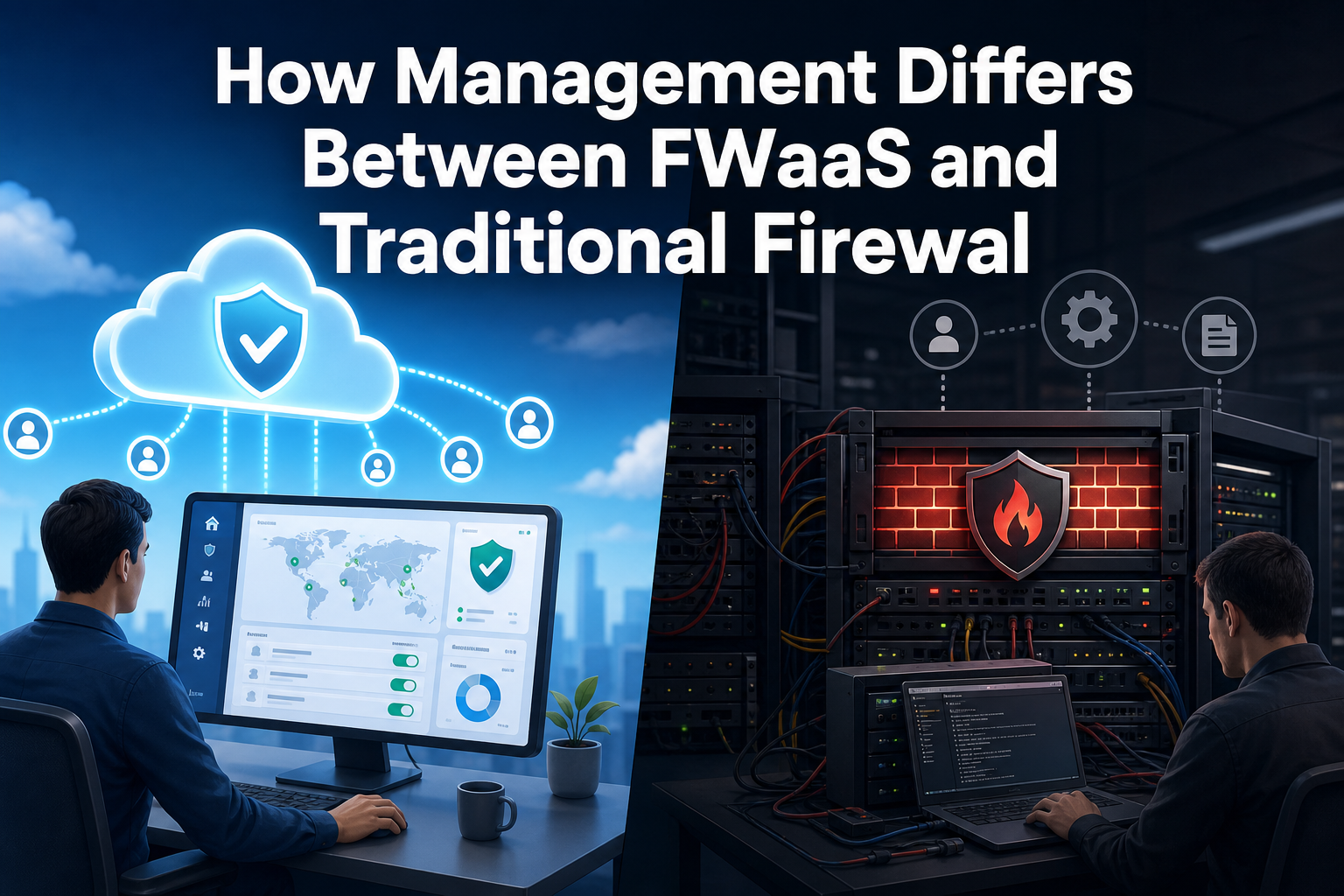
The most noticeable difference between FWaaS and traditional firewalls emerges in day-to-day management. With FWaaS, security policies and configuration are handled through a single online dashboard hosted in the cloud. This centralization means that an IT manager can log in, update a rule, and instantly apply it to all users, regardless of whether they’re in the main office, a branch, or working remotely. For a small IT team—especially one responsible for multiple locations—this is a major relief.
Contrast this with the traditional model: each firewall appliance requires separate attention. If your SME has three offices, you’re managing three sets of rules, running three different update schedules, and troubleshooting three separate devices. When it’s time for a security patch or firmware upgrade, the process is repeated for each site, multiplying the risk that something gets missed or misconfigured. For small teams already juggling day-to-day tasks, this device-by-device approach can quickly become overwhelming.
Centralized cloud management doesn’t just streamline updates—it also reduces the risk of human error. With a single source of policy truth, there’s less chance of inconsistencies creeping in, and IT staff spend less time on routine maintenance. This operational simplicity is especially valuable when you have limited resources or staff turnover. On the other hand, traditional firewalls do offer IT professionals the comfort of hands-on control: they decide exactly when and how to apply changes, which can be reassuring in environments where predictability and direct oversight matter most.
Coverage and Protection: Cloud vs. On-Prem
Coverage is another area where the two models diverge sharply. FWaaS is designed to follow your users, devices, and applications wherever they go—inside your office, out in the field, or accessing cloud services. For MEA SMEs with teams distributed across cities or constantly on the move, this means consistent protection regardless of where work happens. Imagine a logistics company whose drivers need secure access to inventory systems from their trucks, or an education provider whose teachers are connecting from campus, home, or even abroad. FWaaS applies the same inspection and threat prevention everywhere, as long as there’s an internet connection.
Traditional firewalls, in contrast, are strongest at defending the edge of a fixed local network. They excel at keeping out unwanted traffic and threats from the internet, but their coverage is tied to the physical location where they’re installed. If most work and data stay within the company’s walls, this perimeter approach works well. But as soon as users start accessing cloud-based applications, working from home, or connecting over public Wi-Fi, the protection gaps can widen.
A practical example: an SME with multiple branches and remote staff can use FWaaS to create and enforce one security policy across all locations, eliminating the need to buy, install, and maintain multiple hardware firewalls. This not only simplifies operations but also reduces the likelihood of configuration errors—a key concern when IT teams are stretched thin. For businesses with a single site and stable on-premises activity, traditional firewalls still provide robust, reliable protection at the network boundary.
Matching Your SME’s Traffic to the Right Firewall Approach
When deciding between FWaaS and traditional firewalls, the most useful place to start isn’t a list of features—it’s a map of your actual network traffic. Begin by looking at how data flows throughout your SME. If most branch or remote user traffic is destined for the internet or cloud services—think email, cloud storage, SaaS apps—FWaaS is usually the better fit. The service inspects and enforces policies on traffic as it exits the company network, no matter where the user is connecting from.
For example, a company whose salespeople regularly access cloud-based CRM from hotels or whose branches rely on shared cloud drives will benefit from FWaaS’s cloud enforcement. The security layer follows the user, not the building, making it easier to maintain consistency as the organization grows or changes how it operates.
However, if your SME still runs the bulk of its business-critical applications on local servers, or if most network activity is internal—what’s often called “east-west” traffic within a data center—a traditional firewall might still be necessary. These firewalls provide low-latency, high-control access for internal workflows, like shared drives or proprietary apps that never touch the public internet. Some SMEs even combine both approaches: using cloud-based firewalls for distributed and internet-bound traffic, while relying on on-prem appliances to guard their internal data center.
A quick self-check: list your core workflows. If staff-to-cloud and branch-to-internet makes up most of your daily activity, FWaaS will probably simplify your life. If local applications and internal databases are the heart of your business, traditional firewalls offer more direct, hands-on oversight.
Reducing IT Burden with Cloud-Delivered Security
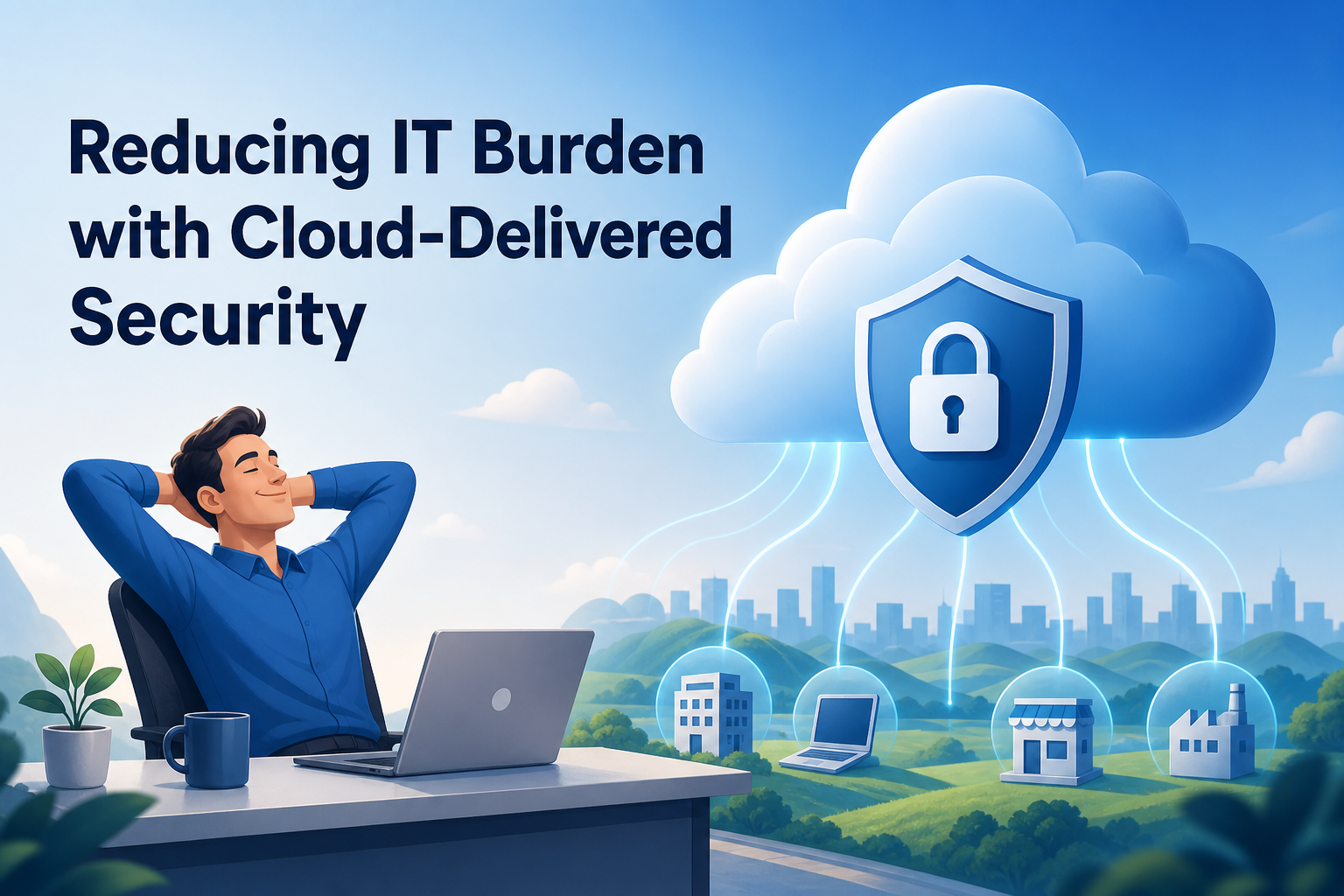
One of the biggest appeals of FWaaS for SMEs is the operational simplicity it brings. Because the firewall platform is managed by the service provider, your IT staff no longer have to worry about patching software, performing hardware upgrades, or troubleshooting appliance failures. That means fewer late nights spent chasing firmware issues, and more time focused on supporting business growth or improving user experience.
FWaaS operates on a subscription basis, turning what used to be a large capital expense (buying hardware) into a predictable operational cost. You pay only for what you use, with no surprise costs for emergency replacements or out-of-warranty repairs. For businesses with tight budgets or unpredictable growth, this model makes planning easier and helps avoid cash flow surprises.
This simplicity is especially valuable for SMEs that don’t have a dedicated security team. The provider handles routine maintenance, threat intelligence updates, and scaling the service as your needs change. You get access to advanced firewall features—like application control, threat prevention, and deep traffic inspection from Layer 3 through Layer 7—without needing to manage the complexity behind the scenes. For many MEA SMEs, this means IT staff can finally step away from “firefighting” and focus on projects that help the business grow.
Making the Right Choice for Your MEA SME
Every SME in the MEA region faces its own unique mix of challenges and opportunities, but when it comes to network security, a few core questions make all the difference: Is your team spread across multiple sites or working remotely? Are your business applications mostly in the cloud, or do they still live on local servers? Does your IT staff have the bandwidth to manage multiple devices, or are they already stretched thin?
If your business is expanding into new cities, hiring remote talent, or adopting cloud tools more each year, FWaaS gives you a way to centralize security without having to grow your IT team. The ability to set one policy and enforce it everywhere removes a major operational headache and reduces the risk of gaps. On the other hand, if your company is rooted in a single location and you value hands-on control, traditional firewalls still offer a straightforward, robust solution.
The best place to start is with a traffic map and a candid look at your IT operations. How do your people connect? What needs protecting most—cloud data, internal files, or both? Sometimes, the right answer is a hybrid: using FWaaS for remote and branch coverage, while keeping a hardware firewall at HQ for local control. The goal isn’t to chase the latest trend, but to choose a firewall model that truly matches how your business works today—and how you plan to work tomorrow. That way, your security setup becomes an enabler of growth, not a roadblock when things change.

I’m Omar Khalil, and I’ve spent the past decade working within the MEA technology channel ecosystem, from distribution in Dubai to partner enablement across Africa. I write about practical strategies for vendors, distributors, and resellers navigating the unique challenges of selling technology solutions in the Middle East and Africa. My focus is on actionable intelligence drawn from real market experiences, not generic theory. When I’m not writing, I’m usually at a channel event somewhere between Riyadh and Read the full About the author page.