How to Choose Between MSSP and Internal SOC for African Enterprises
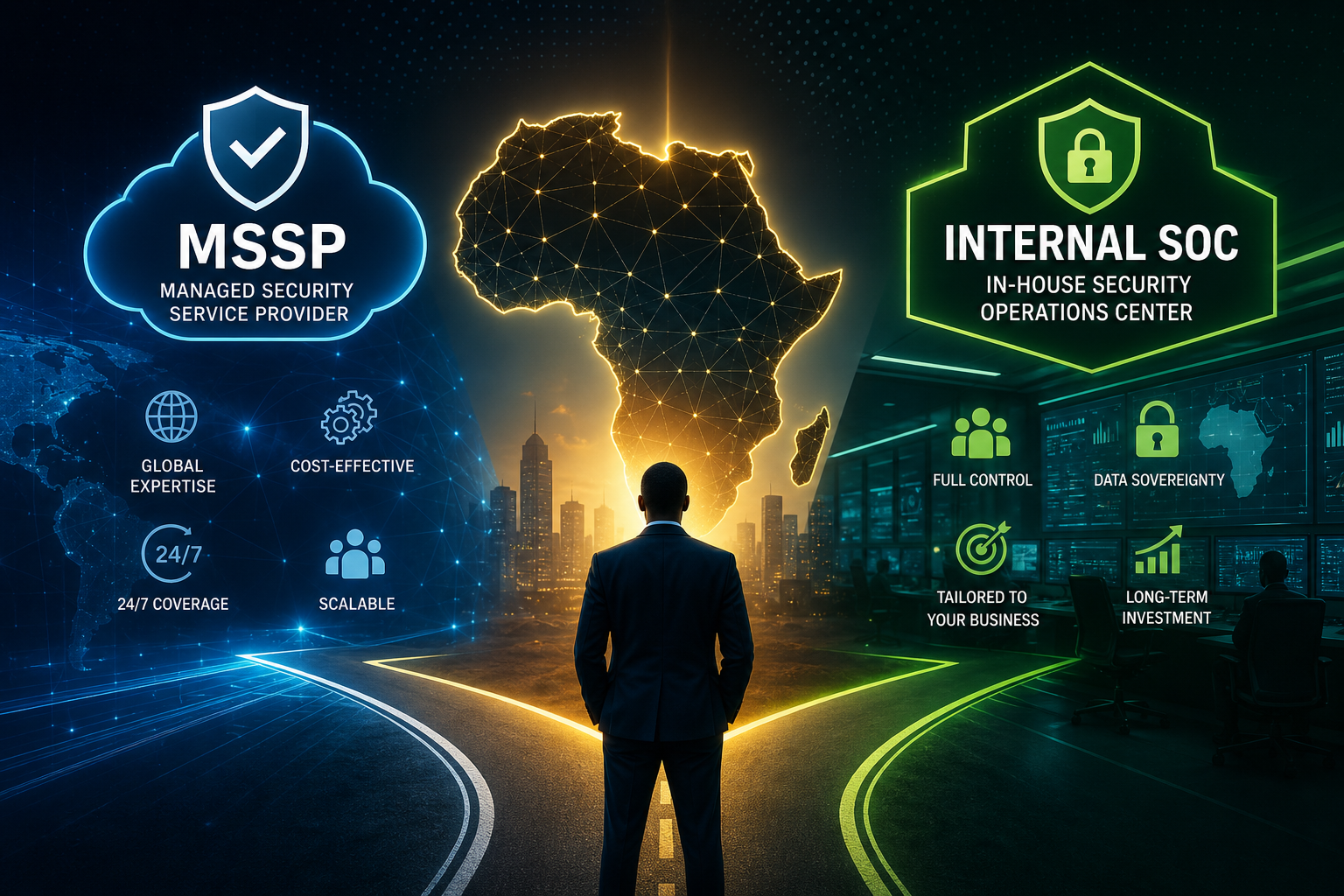
It’s 2:30 in the morning and your phone buzzes with a ransomware alert. No one’s on shift to respond. You scramble to find out who can analyze and contain the threat before it spreads. For many African business leaders, this is all too real—a stressful wake-up call that pushes the question of how to choose between MSSP internal SOC Africa into urgent territory. With budgets stretched thin, a chronic shortage of skilled analysts, and digital expansion not slowing down, companies have to decide: do they build security in-house, or pay for a managed service? There’s no simple answer, but making the wrong call can cost real money and reputation.
Comparing Costs: MSSP vs. Internal SOC in 2026
For most African businesses, cost is the first hurdle. By 2026, the price difference between MSSP and internal SOC options is hard to ignore. Signing with a Managed Security Service Provider (MSSP) for 24/7 monitoring and response usually runs anywhere from $50,000 to $250,000 per year, depending on how complex your environment is and which services you need. That covers having trained analysts on call, security tools included, and non-stop threat detection—without big upfront spending.
Building a true in-house Security Operations Center (SOC) for round-the-clock coverage is a completely different story. Expect to see costs go over $1 million per year once you tally up analyst salaries, benefits, licenses for SIEM and threat detection platforms, hardware, ongoing training, and all the support staff to keep things running day and night. For African companies, every dollar matters, and that price gap is tough to justify unless you have very specific needs.
There’s more than just the annual bill. MSSPs help you avoid big capital expenses and the headache of recruiting or replacing security staff, all while making your budget more predictable. In-house SOCs lock you into high fixed costs and don’t offer much flexibility if you need to cut back.
What Internal SOCs Really Require
The dream of running your own SOC is appealing—total control, direct oversight—but it’s a heavy lift. At a minimum, you’ll need 8 to 12 experienced security analysts to cover all shifts. But keeping true 24/7 operations means you need about 4.5 to 5 full-time employees per position, to account for vacations, sick leave, and turnover. Just to keep two analysts on at all times, you’re looking at close to 10 full-time employees for those roles alone.
And that’s just the start. You’ll also need managers, engineers, and support staff, so the team keeps growing. Finding security professionals is another challenge. In many African countries, there simply aren’t enough qualified candidates, and global firms compete for the same people. Keeping staff trained and engaged is a never-ending task as threats and tools keep changing.
Technology investment is no small matter either. You’re responsible for choosing, buying, and maintaining SIEM systems, endpoint detection tools, and all the integrations that tie them together. Writing detection rules, running threat hunts, and managing the full incident response process takes deep expertise. For many companies, these demands are out of reach both financially and operationally.
How Long Until You’re Actually Protected?

When threats are urgent, time is never on your side. Building a fully functional internal SOC isn’t quick—you’re looking at 18 to 24 months to reach real maturity. That includes hiring and onboarding, setting up technology, building your playbooks, and learning how threats really show up in your unique environment.
With MSSPs, it’s different. Most providers can get you up and running much faster. That speed is crucial if you’re facing immediate risks or have limited staff to begin with. While an in-house SOC can eventually be fine-tuned to your specific needs, the long ramp-up means there’s a long window where your business is exposed.
So if you need protection now—maybe you’re expanding fast or facing new regulations—an MSSP gets you covered quickly, without waiting for a new team to come together.
A Practical Way to Decide What Fits
Choosing between MSSP and internal SOC isn’t just about the money or how fast you can launch. You need a clear process to work through.
Start by setting a realistic annual budget. Can your company afford the ongoing costs of an in-house team year after year? Next, decide if you really need 24/7 coverage, or if monitoring only during business hours is enough. Then, consider how fast you need to detect and respond to incidents. The tighter your response goals, the more you’ll need to invest in people and tools.
Now, weigh the trade-offs: MSSPs offer quick, affordable protection but less hands-on control. An internal SOC gives you deep integration and direct oversight, but it’s slower and more expensive to build. Don’t forget compliance—some industries require controls or local data handling that only an internal team can deliver.
Finally, look honestly at your internal talent pool. If you don’t have security staff or leaders ready to build an SOC, outsourcing may be your only real option for the near future.
Who Manages the Tech and Day-to-Day Tasks?
The real split between MSSP and internal SOC goes beyond just team size. It’s about who runs your security tools and processes. With an MSSP, the provider handles setup, management, and tuning of everything from SIEM platforms and endpoint detection to firewalls, IDS, and vulnerability scanners.
You pay a regular fee, and the MSSP’s analysts work from their own facilities, keeping an eye on your environment, triaging incidents, and sending reports. That means your team doesn’t have to maintain the tech stack or chase false alarms.
With an in-house SOC, your company does it all. You license and run the SIEM, write detection rules, hunt for threats, and lead the entire incident response process—including working with IT and business teams to fix problems. The upside is full control and the ability to customize every detail. The downside: it’s a big operational load, and not every business can carry it.
Why MSSPs Make Sense for African SMEs in 2026
For most small and mid-sized businesses, MSSPs are often the best value option in 2026. The numbers are straightforward—a typical MSSP contract for 24/7 coverage costs a fraction of what it takes to build your own team, and you avoid the pain of recruiting and holding onto rare security talent.
MSSPs also bring proven processes and maturity. Their teams have seen a wide range of threats and know how to respond fast. For African companies that need to move quickly—whether scaling up, entering new markets, or responding to sudden attacks—outsourcing security lets them focus on running the business, not building a cybersecurity department from scratch.
Here’s a real-world scenario: A mid-sized fintech in Nairobi needs immediate 24/7 monitoring to meet customer expectations on data security, but has zero security analysts on staff. Instead of spending millions to build a SOC, they choose an MSSP to gain rapid access to expertise and tooling without waiting for a multi-year SOC build.
Mixing It Up: Hybrid Security Models
Some African organizations realize that neither a pure MSSP nor a full internal SOC ticks all their boxes. That’s where hybrid models come in. With this approach, a small internal team manages the most sensitive incidents or keeps strategic oversight, while routine monitoring and first-line response sit with an MSSP.
This setup keeps high-risk cases and sensitive data close to home, but still taps into outside expertise and round-the-clock coverage for everyday security work. It’s especially handy for regulated industries or businesses with unique compliance demands—you get the benefits of both worlds without the huge price tag of a large in-house team.
Take a South African insurance company as an example. They keep a small group of analysts for sensitive policyholder data, but outsource most perimeter monitoring and low-priority alerts to an MSSP. Their internal team can then focus on strategic improvements and threat hunting, instead of drowning in daily alerts.
Real Examples from African Enterprises
Theory is helpful, but real examples show how these choices play out. Consider a mid-sized enterprise facing rising cyber threats and the steep costs of building a SOC. By opting for an MSSP familiar with the African market, they gained access to mature detection and response at a fraction of the cost of an internal team, and were operational in a much shorter timeframe.
Now compare that to a big bank in Nigeria, heavily regulated and with deep IT resources. They chose to invest in a full internal SOC, hiring the necessary security analysts, building custom detection tools, and creating a tailored incident response program over multiple years. The payoff: total control over sensitive data, close compliance alignment, and the freedom to adapt as threats change.
These stories show that MSSPs are often the practical default for African SMEs, while large organizations with strict control needs may find an internal SOC worth the investment.
How to Make the Call for Your Business
Deciding whether to build or outsource your security operations is one of the biggest choices you’ll face. Start by answering some practical questions: What’s your realistic annual security budget? Do you need nonstop monitoring, or are business hours enough? How fast do you need to be fully protected? Are there regulatory or integration needs only an internal team can handle? And do you have the right people to run an in-house SOC?
Write out your answers as a checklist. If speed and budget matter most, and you don’t have a security team yet, an MSSP almost always makes sense—especially in Africa’s 2026 landscape. If compliance and deep customization are deal-breakers, the internal route can work if you’re ready for a multi-year investment.
And if you’re in between, remember hybrid models exist. They can balance cost savings with control. Most important: make your decision based on your own business context, not just what’s trending elsewhere. Ask the tough questions now and act with your company’s real limits and opportunities in mind.

I’m Omar Khalil, and I’ve spent the past decade working within the MEA technology channel ecosystem, from distribution in Dubai to partner enablement across Africa. I write about practical strategies for vendors, distributors, and resellers navigating the unique challenges of selling technology solutions in the Middle East and Africa. My focus is on actionable intelligence drawn from real market experiences, not generic theory. When I’m not writing, I’m usually at a channel event somewhere between Riyadh and Read the full About the author page.