How to Create a Managed Services Proposal: Structure, Pricing, and Scope Guide
It’s tough to watch a promising managed services deal slip away at the last minute—not because your team can’t deliver, but because your proposal leaves your client puzzled about what’s included or worried about hidden fees. If you’ve ever had to answer, “I thought that was part of the agreement,” or found your project scope growing out of control halfway through the contract, you know how much frustration that brings. The right proposal does more than win business. It sets the tone for trust, keeps expectations clear, and helps both sides avoid unnecessary headaches down the road.
Start with the client’s world, not your services
Jumping in with a list of technical features or pricing details almost guarantees your proposal blends in with the rest. What stands out is showing you really get the client’s day-to-day struggles—their real losses when systems go down, their fear of a data breach, or the pain of onboarding remote teams without IT help. Before you talk about what you offer, take a moment to reflect back what you’ve heard from them.
Suppose you’re talking to a retail client who recently lost sales due to system downtime on a Black Friday weekend. Open your proposal by referencing that exact event. Name the impact: missed revenue, frustrated shoppers, and the pressure on their reputation. Then connect your solution directly to that pain—showing how your approach reduces the risk of repeat chaos, not just by promising uptime, but by addressing their specific experience.
When you describe what “success” will look like using the client’s own business language—referring to outcomes that matter to them, like improved system reliability during their peak periods or smoother onboarding for new hires—you build credibility. An executive summary that’s centered on their business risk, not generic IT jargon, instantly makes your proposal feel tailored, not templated.
Organize your proposal for easy decisions
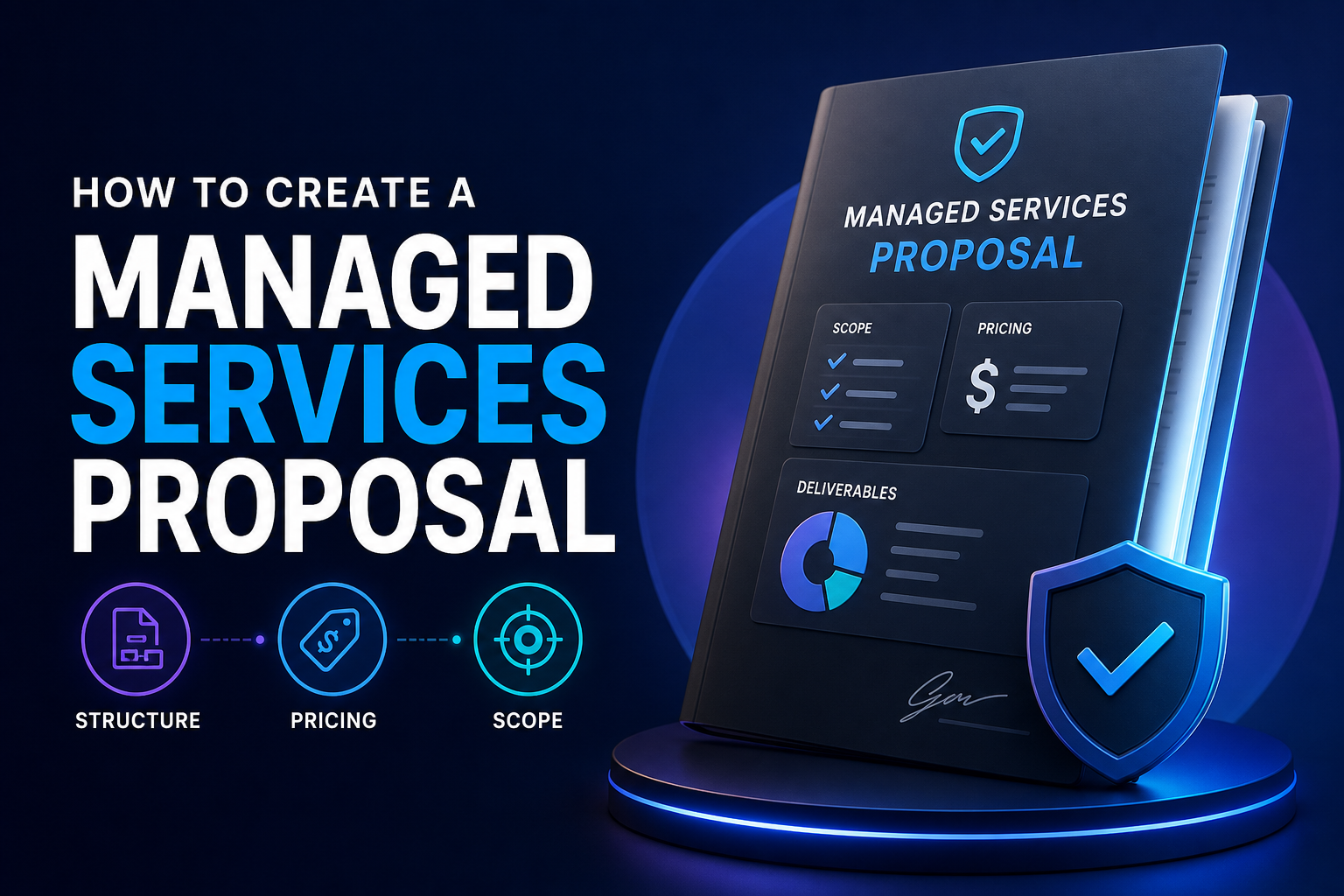
A managed services proposal that’s easy to scan and act on makes everyone’s life simpler. I recommend starting with a clean cover page—client name, agreement title, your company, date, and how long the offer is valid. Follow that with a two- or three-sentence executive summary that spells out the business risk you’re addressing.
It helps to include a short introduction to your company, but keep it focused on why you’re a good fit for this client’s specific needs. After that, get right to the scope of services. Break it down clearly—help desk, remote monitoring, patch management, endpoint security, backups, vendor coordination—each with a quick explanation. Don’t bury the client in tech specs but make sure they know exactly what they’re getting.
A separate section for Service Level Agreements (SLAs) is essential. Lay out coverage hours, response times, and who to call when something breaks. Clients feel much better when they see those details in black and white, instead of having to chase you for them later.
Give pricing its own section, too. Separate recurring from one-time fees, so the client isn’t left guessing what’s a monthly cost and what’s a project fee. Spell out your contract terms, including how long the agreement runs, how it renews, what happens if they need to cancel early, and how you’ll handle confidentiality.
Wrap up with a simple “next steps” section. Make it easy to sign—include a signature block or e-signature option right on the final page. For more involved deals, you can add sections like project timeline, team bios, or brief client stories that illustrate results. According to Scopable, keeping proposals in the 6–8 page range hits the sweet spot: enough information for serious buyers, but not so much that they feel overwhelmed.
Make your scope airtight—what’s in, what’s out

One of the fastest ways for managed services relationships to go sideways is letting the scope get fuzzy. I see too many proposals that list what’s included, but never make clear what isn’t. That’s a recipe for stress when a client expects a major project or equipment rollout “as part of the package.”
In my proposals, I use a table for “Scope of Services”—spelling out exactly what’s included: help desk support, remote monitoring, patching, endpoint protection, backup management, and third-party vendor handling. Right after that, there’s a “Projects and Exclusions” section in plain terms. Major network rebuilds, office cabling, new location setups, and software licenses? Those are always listed as billed separately.
Clients respect this clarity. They can see you’re organized and protecting both sides from confusion. Before I send any proposal, I double-check that every promised service is on the “Included” list and that anything that might be a gray area is clearly marked as “Excluded” or “Billed Separately.” This habit has saved me from months of back-and-forth and helped preserve client relationships.
Keep pricing transparent and separate
Unclear pricing is one of the quickest ways to lose trust. The best proposals put recurring and one-time fees in their own tables, so there’s no confusion. For example, a “Monthly Services” table lists per-user or per-device fees, backup, and monitoring, along with a total at the bottom.
One-time fees for things like onboarding, migrations, or security projects go in a different table, with scope and timelines spelled out. This makes it obvious what’s a regular charge and what’s a one-off. If you offer different service levels, put them side by side so the client can compare at a glance.
QuoterAgent’s advice is to document not just the number, but the pricing model (per user, device, or location), renewal rules, and how any changes will affect billing. Visuals help—colored tables or simple charts allow clients to see the breakdown at a glance, making it easier for them to approve.
Don’t worry about having the lowest rates. The key is making your pricing model clear and explaining what’s included. Always note your assumptions, like “Pricing based on 55 users, reviewed at annual renewal.” This keeps everyone on the same page and avoids unwelcome surprises.
Present add-ons as options, not clutter
A lot of clients don’t know what advanced services you offer unless you show them. That’s why I always include a dedicated “Optional Enhancements” section after the main pricing. Here, I list add-ons like 24/7 monitoring, advanced backup with offsite retention, or premium response times. Each gets its own brief description, the key benefit, and a clear fee.
This lets clients pick and choose what matters to them, without cluttering your core offering or making them feel pressured. I use checkboxes or spaces where they can initial which enhancements they want. This keeps the upsell consultative and avoids anyone feeling blindsided by later charges.
If you regularly roll out new features or integrations, highlight them here. It keeps your proposal current and positions you as someone who’s always looking for ways to add value, not just sell a static package.
Cover your proposal with practical legal terms

Your proposal includes both your intellectual property and sensitive details about your business and the client’s. It’s important to protect that. The Technology Marketing Toolkit suggests including clear language that your proposal is proprietary, covered by a non-disclosure agreement, and can’t be shared or copied without your written approval.
Don’t stop at confidentiality. State the contract duration, renewal terms, what happens if the client needs to exit early, limits of liability, and steps for resolving disputes. You don’t need to drown the client in legalese, but both sides should know where they stand.
Add a quick summary of how reporting will work, your onboarding process, and any assumptions behind your SLAs. This shows your professionalism and reassures clients that you take their privacy seriously.
If you’re adapting a proposal template, always review the legal terms to make sure they fit your business and local requirements. Getting this right upfront can save you from expensive miscommunications or disagreements.
Make the next step obvious
The best managed services proposals don’t leave the client guessing how to move forward. Near the end, lay out the next steps: who to reach out to with questions, how to sign (digital or physical options), and what happens once the deal is accepted.
Always put a signature block or e-sign field on the last page. If you’ve offered options or add-ons, give the client a place to initial their choices. Outline the onboarding process briefly so they know how things will start after signing.
Before you send your proposal, run through a checklist: are all services and exclusions documented? Did you clearly state coverage hours, escalation contacts, and support channels? Are contract renewal and early termination terms spelled out, with all SLAs and third-party dependencies listed? This attention to detail gives clients the confidence to say “yes” and helps you avoid messy disputes later.
A clear, client-focused managed services proposal doesn’t just win new business. It sets you up for honest conversations, smooth delivery, and long-term partnerships that last well beyond the first contract.

I’m Omar Khalil, and I’ve spent the past decade working within the MEA technology channel ecosystem, from distribution in Dubai to partner enablement across Africa. I write about practical strategies for vendors, distributors, and resellers navigating the unique challenges of selling technology solutions in the Middle East and Africa. My focus is on actionable intelligence drawn from real market experiences, not generic theory. When I’m not writing, I’m usually at a channel event somewhere between Riyadh and Read the full About the author page.