How to Avoid Scope Creep in Transformation Projects: Step-by-Step Guide
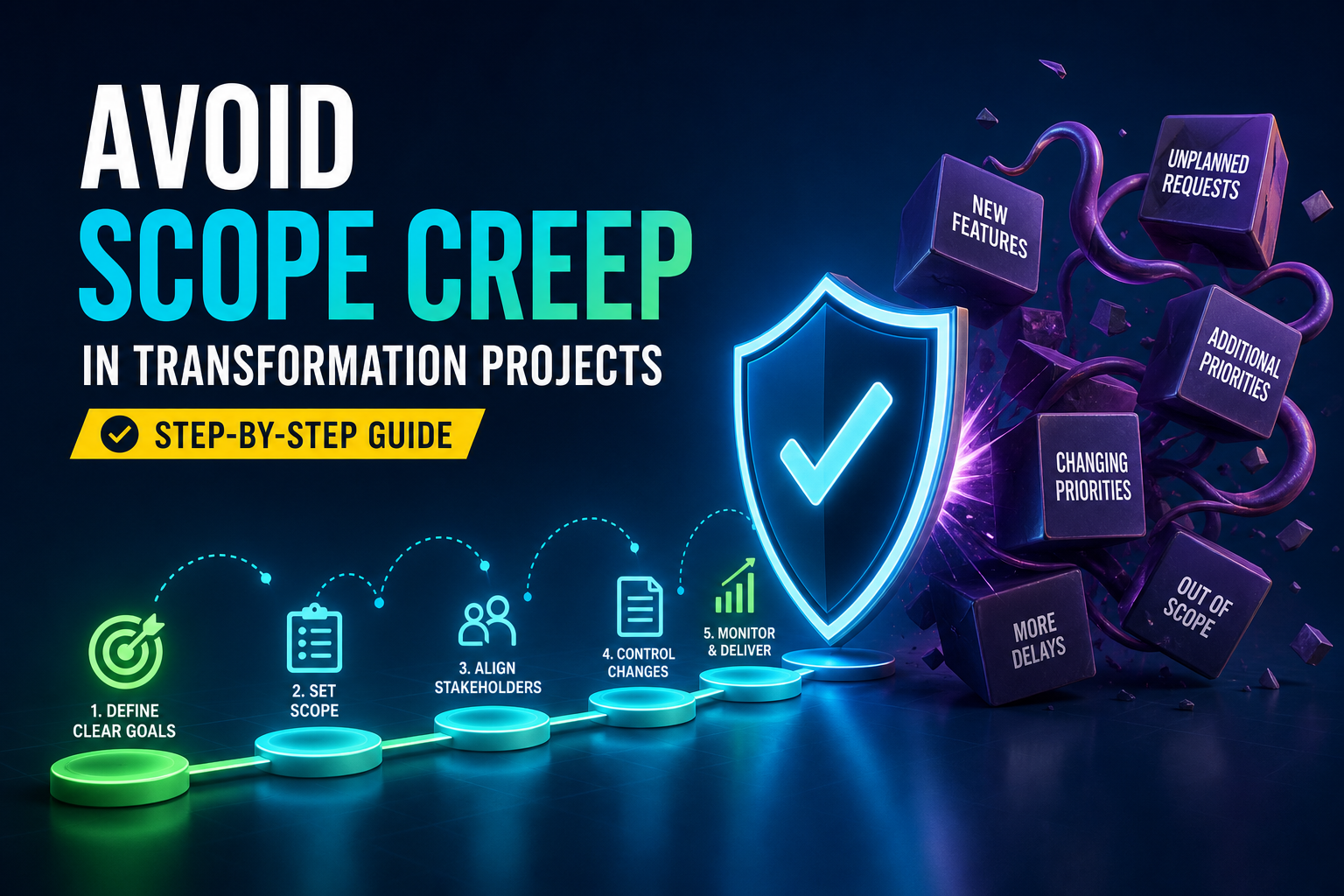
It usually starts with a small, harmless request—someone emails asking, “Could we add this dashboard real quick?” or a stakeholder in a review meeting proposes “just one more integration.” Suddenly, your digital transformation project is weighed down by surprise tasks, shifting deadlines, and a team that feels stretched thin. Scope creep is more than just an organizational hassle; it quietly undermines your progress, turning solid plans into a maze of detours. Anyone who’s spent late nights wrestling with these issues knows the frustration of seeing a focused project dissolve into a stream of add-ons. Still, with practical habits and a clear structure, you can defend your project’s scope—without shutting out important ideas or putting up walls with stakeholders.
Break Large Projects Into Six-Month Chunks
Long, multi-year digital transformation programs almost invite scope creep. Over three years, so much can shift that it’s easy to lose sight of what you set out to achieve. Antonio Nieto-Rodriguez, a well-known expert in strategy execution, advises splitting these long journeys into six-month increments. Each segment gets its own clear deliverables, team, and timeline.
This structure narrows the window for scope drift and makes the work ahead less intimidating. At the end of each six months, you pause for testing and a “lessons learned” session. You look at what went right, what didn’t, and make adjustments before starting the next phase. That way, the big vision stays flexible, but the immediate workload is manageable and specific.
Take a cloud migration, for example. Instead of trying to overhaul every business process at once, migrate one business unit or core platform during a six-month period. Once that’s complete, re-evaluate and plan the next phase using the lessons you learned. This cycle makes it easier to course-correct and avoids the chaos of a project that’s trying to do everything at once.
Build a Formal Change Control Process
Transformation projects attract new ideas constantly. The difference between healthy improvement and chaos comes down to how you manage these requests. Creating a formal change control process means every scope discussion is intentional, visible, and documented.
Here’s how it works in the real world: any request for a new feature, integration, or deliverable gets logged in a central system. An impact analysis follows—looking at costs, deadlines, staffing, and expected benefits. Only then does the request go to a designated decision-maker who approves or rejects it.
For instance, if a department asks to add a new analytics dashboard halfway through the project, you document the request, estimate its effect on your resources and timeline, and get a clear yes or no from leadership. Every approved change is added to the official scope and change log, so everyone knows exactly what’s included and why.
This method doesn’t just slow the flood of “just this once” requests—it also creates transparency. When stakeholders see the trade-offs, they tend to respect the process and think twice before making casual asks.
Use the 70-20-10 Rule With “Swap, Not Add” Decisions

One of the most useful strategies for staying on track comes from Hackaback Technologies: the 70-20-10 rule. Set aside about 70% of your resources—budget, people, and time—for core, must-have functionality. That might mean migrating critical systems or building essential integrations. Another 20% goes to high-value features you chose during planning. The last 10% is your buffer for surprises—the things nobody predicted.
But the key is the “swap, not add” rule. When someone suggests adding a new feature, you don’t simply stack it on top. Instead, you ask, “Which planned feature should we remove or delay to fit this in?” This forces prioritization and keeps the workload stable.
Imagine you’re partway through a transformation and someone requests a chatbot feature. You check if it fits within the 10% buffer. If it doesn’t, something else must come off the list. This approach keeps resource trade-offs visible and stops overload from sneaking in unnoticed.
Set Scope Early and Keep Stakeholders in Sync
The early days of a transformation project matter more than most people realize. Seasoned project managers insist on crafting a detailed scope statement before any work begins. This isn’t just a laundry list of deliverables—it’s a contract that spells out objectives, deadlines, constraints, and especially what’s not included.
Having this clarity is your best shield against a flood of minor requests. When someone brings up a new idea, you can point to the scope document and have a real conversation: “That isn’t part of our current scope. Should we swap something or save it for the next phase?” This isn’t stonewalling—it’s about making choices visible.
Tie each subproject to a handful of SMART goals (Specific, Measurable, Achievable, Relevant, Time-bound), and revisit them at every major checkpoint. Regular stakeholder meetings—weekly or bi-weekly—give you a place to flag issues, check priorities, and make sure everyone is still pointing in the same direction.
Ambiguity is a magnet for scope creep. The clearer you are about what’s included and what’s not, the easier it is to keep everyone aligned and the project moving forward.
Use Work Management Software to Track Scope
Relying on spreadsheets or email to manage scope is a recipe for confusion. Modern work management tools centralize everything: scope documents, change requests, approvals, and updated timelines all live in one place.
Built-in workflows route change requests to the right people, send out notifications, and log approvals. This speeds up decisions and builds an automatic audit trail. You can always see what’s in scope, what’s been added, and the reasons behind each change.
When your transformation project involves multiple departments—or external vendors—these platforms become even more valuable. They prevent informal requests from slipping through unnoticed. If something isn’t in the system, it’s not in scope.
And when executives want a status update, you can show them exactly how the project is tracking—what’s finished, what’s pending, and how every change has affected the plan and the budget.
Catch Scope Creep Early and Respond Fast
Scope creep rarely arrives in one big wave. More often, it sneaks in through repeated “just one more thing” requests or small tweaks that pile up. Spotting these patterns early makes them much easier to fix.
Look out for signs like stakeholders asking for multiple minor additions, deadlines slipping without more funding, or morale dropping because the team feels overloaded. If project meetings are always running long due to new ideas, or your task list keeps growing, it’s time to step back and review the scope.
When you see these warning signs, act immediately. Bring your team and key stakeholders together for a scope review. Ask the tough questions: Are these changes helping us meet our original goals? What are we willing to give up to make space for them? Make it clear that every change has a cost, and document every decision.
Open discussions and honest trade-offs help refocus the project. When people see that rules aren’t arbitrary but exist to protect the team’s ability to deliver, it becomes easier to stick to the plan.
Saying “No” and Holding the Line

Telling a colleague or executive “no” isn’t always easy, especially in workplaces where saying “yes” feels like the safe choice. But protecting the scope is about giving the project a real chance to succeed, not about being difficult.
A practical way to handle this is to teach project leads and product owners a few scripts for redirecting informal requests. For example: “That sounds like a strong idea—can you submit it through the change control process so we can see how it fits with our current work?” Or: “Let’s put this on the list for the next phase, since all our resources are currently committed.”
Explaining the swap, not add principle early helps set expectations. When stakeholders know that every new request means another will be delayed or dropped, they start to respect the boundaries you set.
If you’re worried about seeming inflexible, remember: clarity is kindness. When everyone understands the rules, frustration drops and nobody gets blindsided.
Keeping Your Transformation Project on Course
Scope creep isn’t a one-time event—it’s a steady pressure that never really goes away during digital transformation. The most successful teams don’t just set boundaries at the beginning; they revisit them at every milestone. Regular reviews, visible logs of changes, and open conversations make it possible to adapt when business needs shift, without losing control.
When your team delivers exactly what was promised, on time and within budget, take the time to celebrate. Share what you learned—both successes and lessons from what didn’t work—with other project teams. Over time, these habits create a culture where scope discipline isn’t seen as bureaucracy but as the way to actually achieve meaningful, lasting change.

I’m Omar Khalil, and I’ve spent the past decade working within the MEA technology channel ecosystem, from distribution in Dubai to partner enablement across Africa. I write about practical strategies for vendors, distributors, and resellers navigating the unique challenges of selling technology solutions in the Middle East and Africa. My focus is on actionable intelligence drawn from real market experiences, not generic theory. When I’m not writing, I’m usually at a channel event somewhere between Riyadh and Read the full About the author page.